When to Take a Pregnancy Test
Test from the first day of your missed period; a week later is the most reliable. Find both days for your cycle.
The tool
Want this in your pocket? Get the iOS app:


Pregnancy test timing at a glance
| When | What it means |
|---|---|
| Before your period is due | Too early for most tests. A negative result this early cannot be trusted. |
| The day your period is due | The earliest day for most tests. Even a perfect test could detect only about 90% of pregnancies on this day (Wilcox 2001). |
| One week after that | The most reliable day: up to about 97% (Wilcox 2001). |
| You do not know when your period is due | Test at least 21 days after you last had unprotected sex (NHS). |
| Negative, and still no period | Wait a few days and test again. If a second test is negative and your period still has not come, see your doctor (NHS). |
Your two test days, by cycle length
In cycle days, where day 1 is the first day of your last period. On a 28-day cycle your period is due on day 29, which is day 1 of the next cycle.
| Cycle length | Earliest test | Most reliable |
|---|---|---|
| 21 days | day 22 | day 29 |
| 22 days | day 23 | day 30 |
| 23 days | day 24 | day 31 |
| 24 days | day 25 | day 32 |
| 25 days | day 26 | day 33 |
| 26 days | day 27 | day 34 |
| 27 days | day 28 | day 35 |
| 28 days | day 29 | day 36 |
| 29 days | day 30 | day 37 |
| 30 days | day 31 | day 38 |
| 31 days | day 32 | day 39 |
| 32 days | day 33 | day 40 |
| 33 days | day 34 | day 41 |
| 34 days | day 35 | day 42 |
| 35 days | day 36 | day 43 |
| 36 days | day 37 | day 44 |
| 37 days | day 38 | day 45 |
| 38 days | day 39 | day 46 |
| 39 days | day 40 | day 47 |
| 40 days | day 41 | day 48 |
| 41 days | day 42 | day 49 |
| 42 days | day 43 | day 50 |
| 43 days | day 44 | day 51 |
| 44 days | day 45 | day 52 |
| 45 days | day 46 | day 53 |
Earliest = the first day of your missed period; most reliable = 7 days later. Any time of day works for most tests (NHS).
How this works
The short answer: test on the day your period is due, the first day of a missed period. That is the earliest day most home tests are made for. If the test is negative and your period still has not come, test again a week later, when a test is most reliable. If you do not know when your period is due, the NHS says to test at least 21 days after you last had unprotected sex.
Work it out from the first day of your last period and your cycle length, or from your ovulation day if you know it from an ovulation test or a temperature chart. You get both test days, the implantation window before them and a short note on what to do today: wait, test now, or test now for the most reliable result.
Why wait at all? Tests look for the hormone hCG, which the body only makes after implantation, 6 to 12 days after ovulation. On the first day of a missed period about 1 pregnancy in 10 has not implanted yet (Wilcox 2001), so testing earlier mostly buys a negative result you cannot trust. This page gives dates only: it does not read test results, it is not a diagnosis and it is not contraception.
The math behind it
From your last period: your period is due on the first day of your last period + cycle length, the ProbaBaby app's Planning rule. From a known ovulation day: ovulation + 15 days, an average 14-day second half of the cycle.
Earliest test day = the day your period is due. Most reliable test day = 7 days later. These match the app's own test timing and Wilcox 2001: with a highly sensitive laboratory test, at most about 90% of pregnancies were detectable on the first day of the missed period and about 97% a week later.
The implantation window shown with them is 6 to 12 days after ovulation (Wilcox 1999), with ovulation estimated at cycle length minus 14 days.
In the ProbaBaby app
iPhone · iPad · Apple WatchFrom trying to conceive to week by week, in one app
Track your cycle in the free Planning module while you try. If your test is positive, switch the app to the Pregnancy module and follow your pregnancy week by week.
The app also
- Planning: log your period, ovulation tests, temperature, cervical mucus and symptoms, with a Learn tab that covers implantation and when to test.
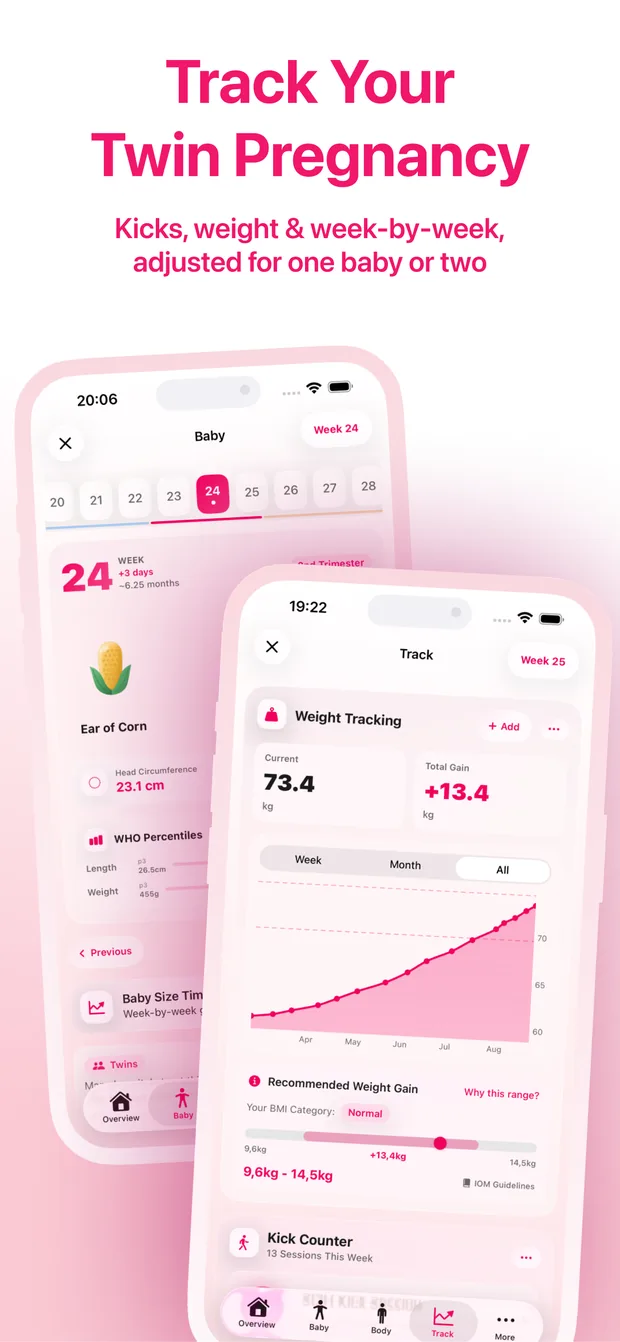
- Pregnancy: week-by-week tracking with your baby's size, a kick counter, a contraction timer and 51 medical tests by trimester and for the newborn.
- PDF reports for your doctor in both modules, shareable by QR code (24 hours, one view).
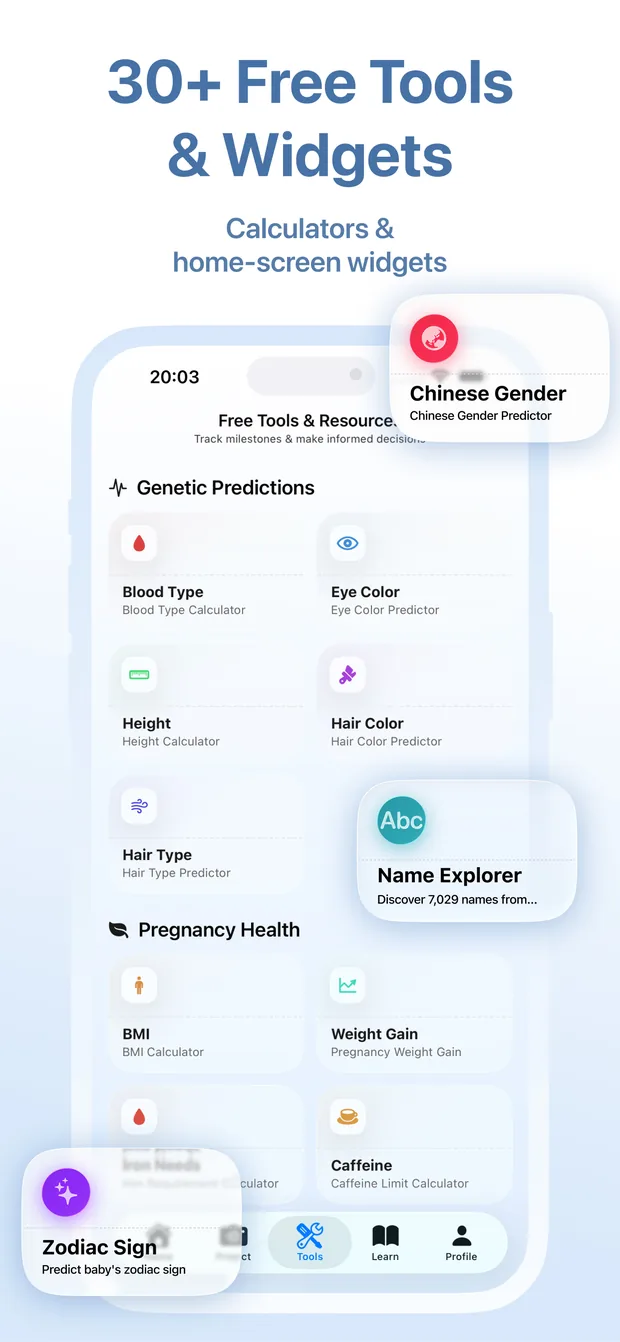
Free to download and use: pregnancy, baby and mom tracking, 32 tools, PDF reports, widgets, Apple Watch and family sharing cost nothing. Only AI baby predictions use credits.
On the App Store
Frequently asked questions
From the first day of your missed period for most tests. Some very sensitive tests are sold for use a few days earlier, but even a perfect test cannot find a pregnancy before implantation, and about 1 in 10 pregnancies has not implanted by the day a period is due (Wilcox 2001).
If you know when your period is due, test on that day. If you do not, the NHS says to test at least 21 days after you last had unprotected sex. Ovulation, fertilisation and implantation all have to happen first, and hCG then needs a few days to rise.
For most tests it does not matter. The NHS says you can use urine collected at any time of day. Follow the instructions of your test, and avoid drinking a lot of water just before testing.
Wait a few days and test again, or test on the most reliable day this page shows. If a second test is negative and your period still has not come, see your doctor (NHS). Stress, illness, weight change and some contraception can all delay a period.
No. It only tells you when a test is worth taking. It does not read test results and it cannot tell you anything about a pregnancy. If your test is positive, contact your doctor or midwife to start your care.
Severe or one-sided pain low in your belly, especially with a positive test or a late period, needs help the same day. Very heavy bleeding, or bleeding with severe pain, dizziness or fainting, needs your emergency number now.
Related tools
Related tools
Related reading