Ovulation Calculator
Ovulation is usually about 14 days before your next period. See your likely ovulation day and six-day fertile window.
The tool
Want this in your pocket? Get the iOS app:


Ovulation day by cycle length
Day 1 is the first day of your period. Ovulation is counted back from the next period: about 14 days before it, so it moves with your cycle length while the second half of the cycle stays about the same. Rows outside 24 to 38 days, the range FIGO counts as typical, are marked.
| Cycle length | Ovulation | Fertile window | Most fertile | Start tests | Next period |
|---|---|---|---|---|---|
| 20 days (outside the typical range) | 6 | 1–6 | 4–6 | 6 | 21 |
| 21 days (outside the typical range) | 7 | 2–7 | 5–7 | 6 | 22 |
| 22 days (outside the typical range) | 8 | 3–8 | 6–8 | 6 | 23 |
| 23 days (outside the typical range) | 9 | 4–9 | 7–9 | 6 | 24 |
| 24 days | 10 | 5–10 | 8–10 | 6 | 25 |
| 25 days | 11 | 6–11 | 9–11 | 6 | 26 |
| 26 days | 12 | 7–12 | 10–12 | 7 | 27 |
| 27 days | 13 | 8–13 | 11–13 | 8 | 28 |
| 28 days | 14 | 9–14 | 12–14 | 9 | 29 |
| 29 days | 15 | 10–15 | 13–15 | 10 | 30 |
| 30 days | 16 | 11–16 | 14–16 | 11 | 31 |
| 31 days | 17 | 12–17 | 15–17 | 12 | 32 |
| 32 days | 18 | 13–18 | 16–18 | 13 | 33 |
| 33 days | 19 | 14–19 | 17–19 | 14 | 34 |
| 34 days | 20 | 15–20 | 18–20 | 15 | 35 |
| 35 days | 21 | 16–21 | 19–21 | 16 | 36 |
| 36 days | 22 | 17–22 | 20–22 | 17 | 37 |
| 37 days | 23 | 18–23 | 21–23 | 18 | 38 |
| 38 days | 24 | 19–24 | 22–24 | 19 | 39 |
| 39 days (outside the typical range) | 25 | 20–25 | 23–25 | 20 | 40 |
| 40 days (outside the typical range) | 26 | 21–26 | 24–26 | 21 | 41 |
| 41 days (outside the typical range) | 27 | 22–27 | 25–27 | 22 | 42 |
| 42 days (outside the typical range) | 28 | 23–28 | 26–28 | 23 | 43 |
| 43 days (outside the typical range) | 29 | 24–29 | 27–29 | 24 | 44 |
| 44 days (outside the typical range) | 30 | 25–30 | 28–30 | 25 | 45 |
| 45 days (outside the typical range) | 31 | 26–31 | 29–31 | 26 | 46 |
Cycle days, with a 5-day period and a 14-day luteal phase. Ovulation tests start five days before ovulation, never during the period. * outside the typical range.
The chance of pregnancy on each fertile day
In the Wilcox 1995 study of 221 women trying to conceive, pregnancy came only from sex in the six days ending on ovulation day. These are the chances for sex on one day only:
| Timing | Chance | Fertility |
|---|---|---|
| 5 days before ovulation | 10% | Low |
| 4 days before ovulation | 16% | High |
| 3 days before ovulation | 14% | High |
| 2 days before ovulation | 27% | Peak |
| 1 day before ovulation | 31% | Peak |
| Ovulation day | 33% | Peak |
How this works
The short answer: on a 28-day cycle, ovulation usually happens around day 14, and your fertile window is days 9 to 14. On any other cycle length, count back about 14 days from your next period. The NHS puts ovulation 10 to 16 days before the next period; this calculator takes the middle of that range, the same rule the ProbaBaby app uses.
Enter the first day of your last period, your usual cycle length and how long your period lasts. You get your estimated ovulation day, the six days of your fertile window, the three most fertile days, the day to start ovulation (LH) tests and the next three cycles. Switch to the fertile-window view for a day-by-day list with the chance of pregnancy from sex on each day.
Use the dates as a starting point, not a fact about your body. Ovulation moves from cycle to cycle even when periods are regular: in one study, women had at least a 10% chance of being in their fertile window on every day from cycle day 6 to day 21 (Wilcox 2000). Ovulation tests, cervical mucus and basal body temperature tell you more about the cycle you are in. This is a calendar estimate. It is not contraception and not a diagnosis.
The math behind it
Ovulation cycle day = cycle length − 14, an average 14-day luteal phase. Day 1 is the first day of your period, so the date is your last period's first day + (ovulation cycle day − 1). On a 28-day cycle that is day 14; on a 32-day cycle, day 18; on a 24-day cycle, day 10.
Fertile window = the five days before ovulation plus ovulation day (Wilcox 1995), never before cycle day 1. The most fertile days are ovulation day and the two days before it, where the chance of pregnancy from sex on one day is highest in the Wilcox data: 27% two days before, 31% the day before and 33% on the day.
Ovulation tests start five days before ovulation, or the day after your period ends if that is later. Each next period is one cycle length after the last. Below 21 days the estimate is marked as unreliable, and outside 24 to 38 days, the range FIGO counts as typical, the cycle is marked as atypical.
These are the rules of the ProbaBaby app's Planning engine, and the calculator is tested against the app's own functions on every cycle length from 20 to 45 days, across month ends, a leap day and New Year.
In the ProbaBaby app
iPhone · iPad · Apple WatchCheck the estimate against your own signs, cycle by cycle
A calendar can only give you an average. The app's free Planning module lets you log what your body is doing, and moves the fertile window when your own signs confirm ovulation.
The app also
- Six things to log: basal body temperature, cervical mucus, your period, symptoms, intimacy and ovulation tests, each with its own history.
- Four signals in one ovulation check: the calendar, a temperature shift, an ovulation-test peak and egg-white mucus, with a confidence level.
- A cycle calendar and seven charts, including a fertility curve drawn from the published Wilcox 1995 day-by-day chances.
- Cycle and fertility reports as PDFs for your doctor, shareable by QR code.
- The Planning module is free: no credits and no paywall.
PDF reports for the doctor visit, pediatrician visit, prediction, birth plan, birth decisions, cycle, fertility and the Period Tracker’s postnatal check, shareable by QR code (24 hours, one view). There is no CSV export from the baby log.
On the App Store
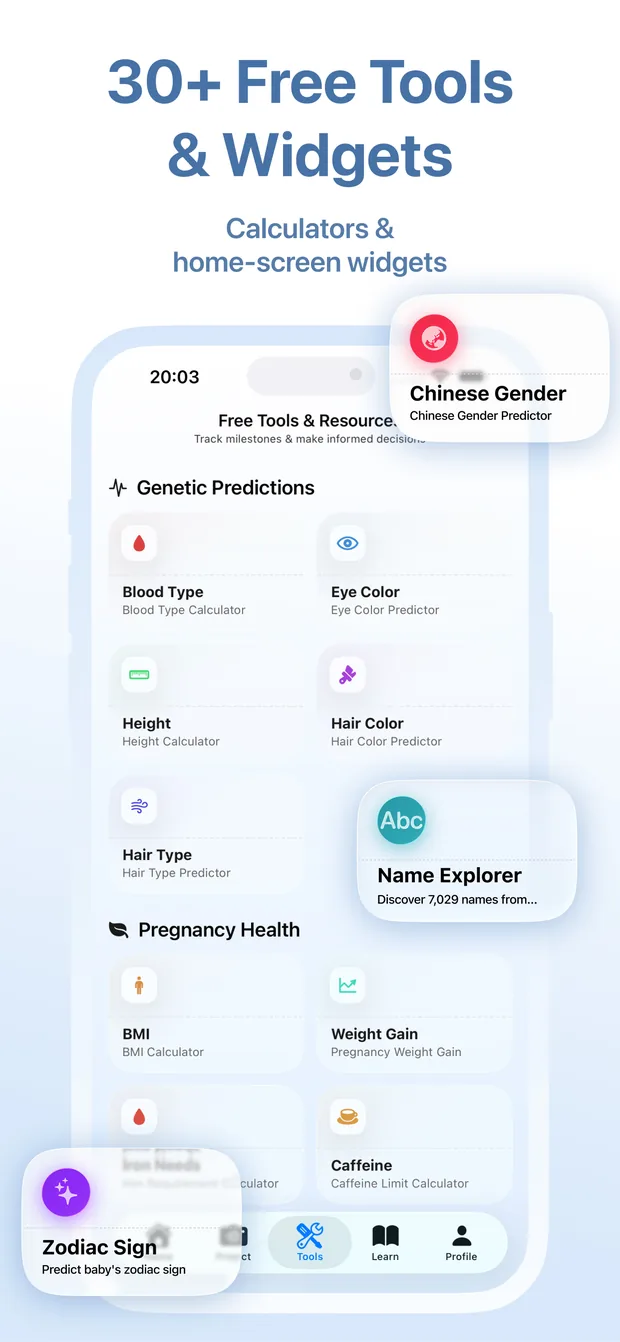
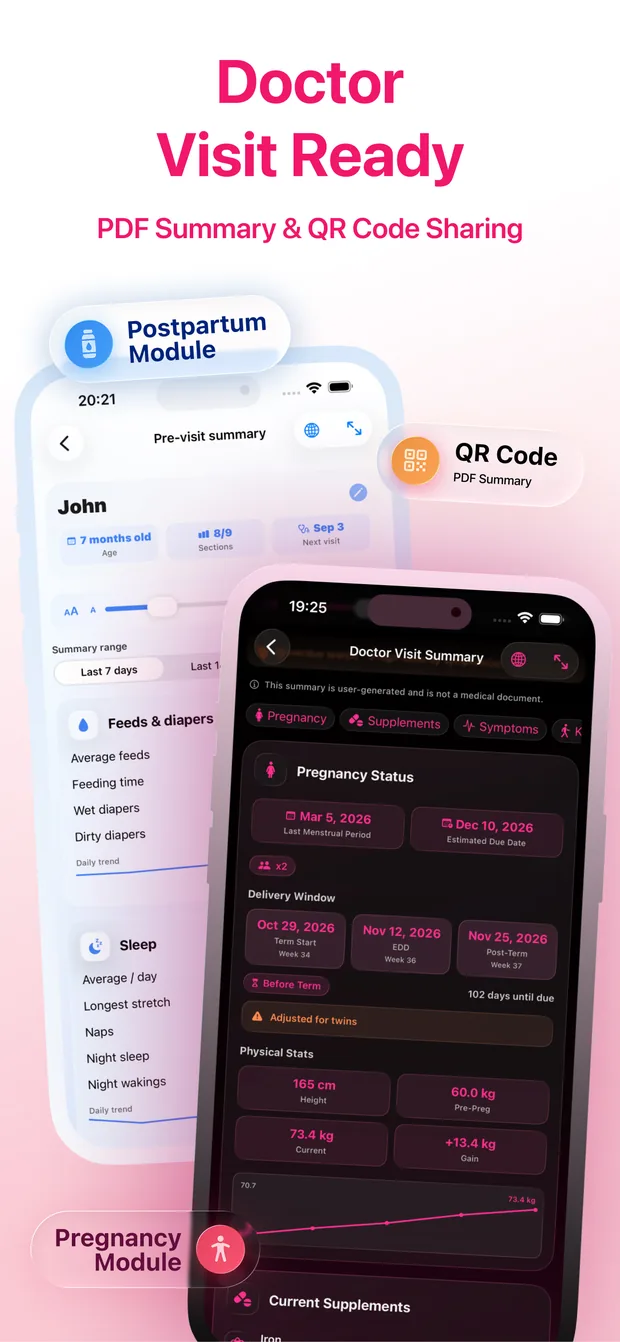
This page and the app, side by side
| Feature | This page | ProbaBaby app |
|---|---|---|
| Ovulation day | A calendar estimate from your cycle length | The same estimate, then checked against temperature, ovulation tests and mucus |
| Your history | — | Logs, histories and charts for every cycle |
| For your doctor | Print this page | Cycle and fertility PDF reports, shared by QR code |
Frequently asked questions
It depends on your cycle length, not on your period. Ovulation is about 14 days before your next period, so on a 28-day cycle it is around day 14, about nine days after a five-day period ends. On a 35-day cycle it is around day 21, and on a 24-day cycle around day 10.
About six days: the five days before ovulation and ovulation day itself. Sperm can survive for several days (the NHS says up to 7), but the egg lasts only about a day once it is released. In the Wilcox 1995 study, no pregnancy came from sex after ovulation day.
Ovulation day and the two days before it. In the Wilcox data, sex on one of those days led to pregnancy in 27% to 33% of cycles, against 10% to 16% three to five days before. For couples trying to conceive, sex every two to three days through the cycle covers the window without timing it exactly.
Yes. The window here is an average, and real ovulation moves. In one study, women had at least a 10% chance of being in their fertile window on every day from cycle day 6 to 21, and the researchers warned that the timing can be highly unpredictable even when cycles are usually regular (Wilcox 2000). The NHS also notes it is possible, although not very likely, to get pregnant soon after a period if you ovulate early or have a short cycle.
No. This calculator is not contraception. Fertility awareness methods used as birth control rely on daily signs such as temperature and cervical mucus, taught by a trained practitioner, not on a calendar estimate. If you want to avoid pregnancy, talk to your doctor, midwife or a sexual health service about contraception.
Use your average cycle length, but expect the dates to be less certain. The NHS counts cycles shorter than 21 days or longer than 35 days as irregular, and FIGO counts 24 to 38 days as typical. Ovulation tests and cervical mucus help more than a calendar here. If your cycles are irregular and you are struggling to get pregnant, see your doctor.
About five days before your estimated ovulation day, and not before your period has ended. The calculator shows that day. Test once a day until you see a positive result; ovulation usually follows a positive LH test within about a day or two.
Related tools
Related tools